
Differentiation at the turning point: don't be afraid!
|
Despite all of the technology that is helping to make our world a global society, businesses today do not float around in thin air regardless of what some managers think. The idea of the "homeless company," moving its headquarters from place to place based on taxes and other advantages, is not reality.
Sure, a firm might be not have a home in terms of country of origin. And branch locations are no longer a necessity. But every company lives within a certain context, within a certain area of knowledge and influence. This context has no geographical bounds. It is becoming more and more global. For instance, if a company with a branch in Africa creates an environmental disaster, it does not have a problem in Africa. It has a global problem. The media, various organizations and concerned citizens will see to that. Perhaps a grocery retailer sells a product that is contributing to the extinction of a species. His problem is not that he will lose the product from his line. His problem is one of responsibility to nature. Many companies have yet to fully recognize the challenges facing them as a result of society's changing views. The paradigm is such that it used to be okay to be a successful company. Now it is better to be a responsible company. The requirements facing companies and their products and services have changed. Businesses are expected to be change agents, moving their part of the world in the right direction. Of course, the right direction is subject to interpretation by many. |
As governments have withdrawn from so many areas of responsibility, NGOs and the business world have taken advantage of new opportunities. They are expected to be the good guys, corporate citizens. If they are not, they will have trouble with the public, consumers and their own future. Problems do not start when a company wants to sink its oil platform. They start when questions are asked about the origin of components or when standards are not met.
Contexts are always changing. Societal sensibilities continue to evolve. The ways in which critics attack are being refined and better targeted. This all demands businesses to be on their toes if they want to keep or improve their positions. Advertising is no longer the answer. Instead, things must be put into context.  presentation – click to download pdf-file
That's why consigliare has developed CONTEXT. |
It begins as a development process that is transferred into the company step by step. A 360-degree-Think-Tank helps create new perspectives, approaches and formats to spur content.
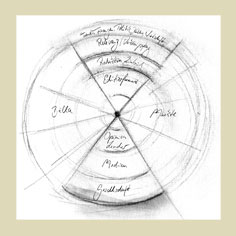 CONTEXT radar example – click to enlarge |